Why are we allowing victimhood to preclude us from acknowledging what is scary?

Obsession rocked the horror world this earlier year, becoming the highest-grossing horror film of the 21st century and the fifth highest-grossing horror film of all time, shocking box office analysts and beating out Michael Jackson’s highly-anticipated biopic Michael in an unexpected blow.
The premise of the film follows a group of mid-20-somethings who work together at a music store; one member of the group, Bear, has a crush on fellow group member Nikki. The film starts out with one of the friends Ian helping Bear rehearse his confession of affection for Nikki. Later that day, Bear returns home to find his cat dead from ingesting poison and is overcome with grief. After taking care of the cat, Bear gets a phone call from Nikki, unaware of what has transpired, convincing him to come out to trivia. While on the phone, the crystal in Nikki’s necklace falls down the drain, upsetting her. To try to cheer her up, Bear stops by a metaphysical store on the way to trivia to buy her a new crystal, but ends up instead buying a One-Wish-Willow stick that will grant its user any wish upon breakage.
When we meet Nikki, it is left largely ambiguous whether Bear’s feelings are mutual. Bear’s crush is awkward, yet in some ways wholesome, though it does at times feel he’s just an official friend-zoning away from going into a major depressive episode. At the end of trivia night, Bear chickens out of confessing his feelings for Nikki and breaks the One-Wish-Willow as he’s dropping her off at home.
The consequences of Bear’s wish come to plague him throughout the movie. As hinted by the title, Nikki becomes unhingedly obsessed with Bear. It’s clear from the beginning that the Real Nikki, possessed by the power of the wish, is still trapped inside Wish Nikki, sometimes breaking through in sudden moments, and Nikki’s behavior becomes increasingly unpredictable and erratic and controlling. Nikki watches Bear sleep, duct tapes Bear’s front door shut, feeds Bear a sandwich stuffed with the meat from his dead cat, urinates and defecates on herself while Bear was away at work, stabs herself in the eye with a bottle at a party after reading Hansel and Gretel incest smut to everyone, and bashes their co-worker Sarah’s face in with a brick as Sarah starts confessing her feelings for Bear.
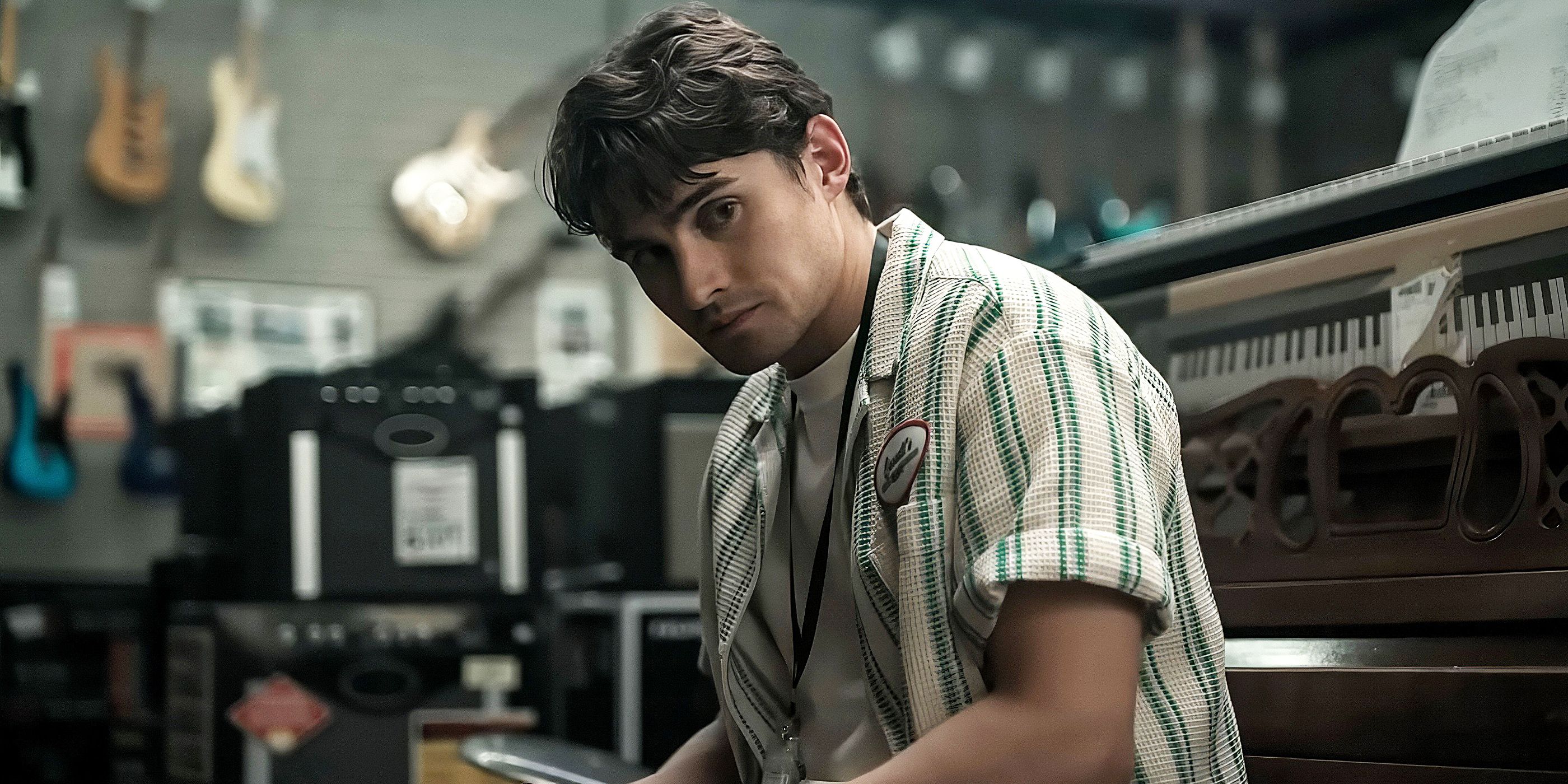
In one pivotal scene in the film, the Real Nikki speaks while Wish Nikki sleeps, begging Bear to kill her to end her suffering. When Bear replies, “What’s so bad about being with me?” the Real Nikki replies, “I’ve never been with you, Bear.”
The internet and moviegoers quickly latched onto the film’s themes of female autonomy and male control, turning Bear into an unredeemable abuser and Nikki into his victim. While I still think the film certainly taps into the abuse dialogue and the “not all men” conversation, leaning into women’s fears of whether the men in their lives would do the same to them (this litmus test is causing break-ups on TikTok apparently), I don’t think it’s accurate to label Bear as abusive or call him the villain of the story.
In Dr. Laura Robinson’s multi-part Substack article, “Obsession and the Narcissistic Abuser as Metanarrative of the Internet”, Robinson outlines the types of abuse and how they manifest as “patterns of behaviors used to maintain power and control.” According to Robinson’s analysis, Bear does not qualify as an abuser. Bear is unaware of what will happen to Nikki when he snaps the One-Wish-Willow; while we can say him wishing that she felt the same way about him is him wishing for control over the way she feels, can we agree that Bear is not operating on a malicious level? Michael Johnston’s performance in the movie makes it overtly clear that Bear is simply pathetic rather than conniving.
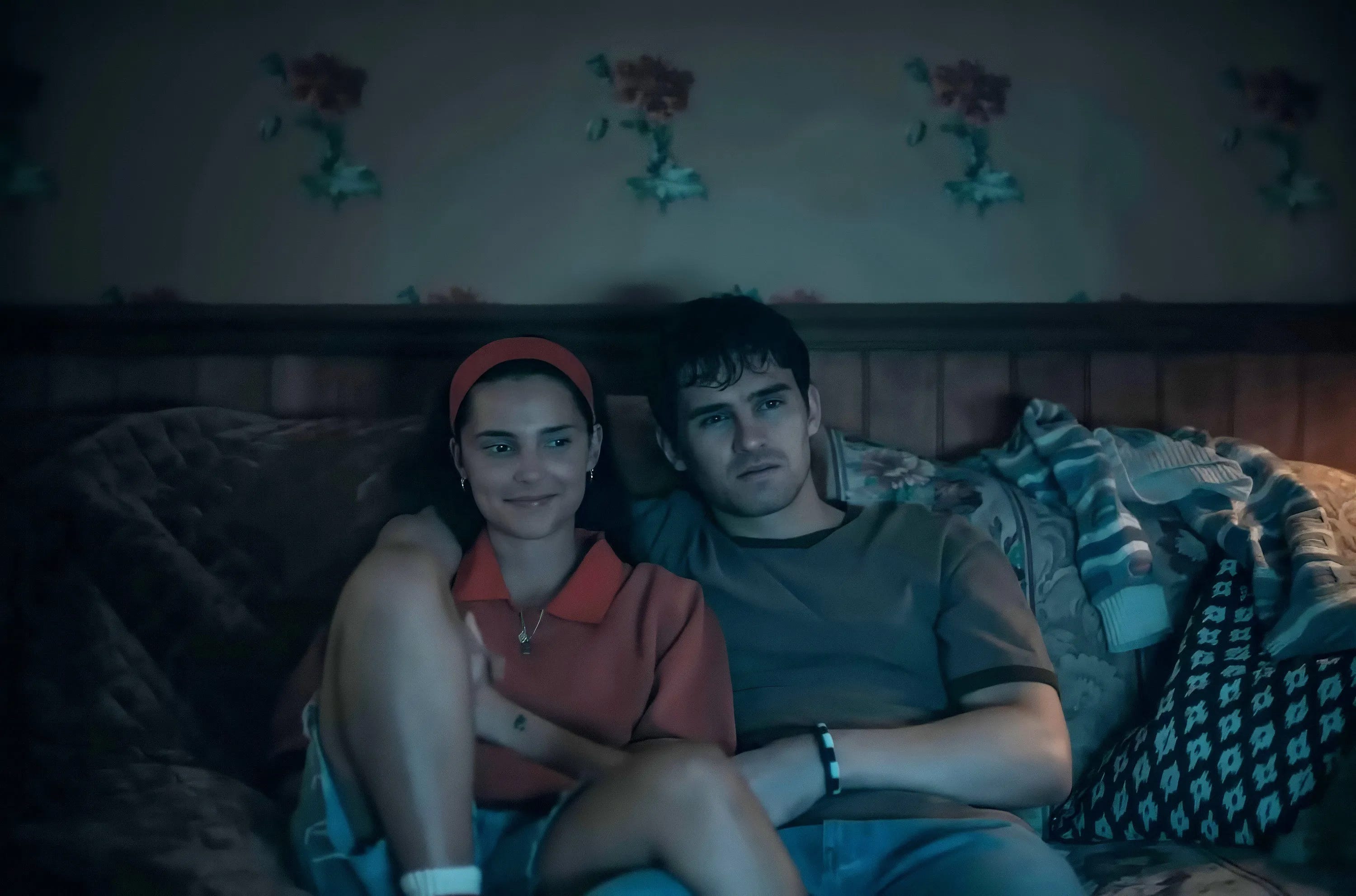
Misunderstanding and mistakes do not constitute as abuse — abuse is deliberate and intentional, even if an abuser is not aware they’re an abuser. While it’s easy to frame Bear as a villain for subjecting Nikki to the wish, he himself is not controlling Nikki, and is unaware for much of the movie that she is being possessed. As movie viewers, we have to remember that characters in a movie are not aware they are in a movie. We know the genre is supernatural horror, but for Bear, it’s normal life. If you had a partner behaving the way Nikki was, your assumptions about the cause may lean towards mental illness or stress rather than a terrifying supernatural entity controlling them. Continuously, Bear chalks up Nikki’s behavior to unhealthy coping mechanisms or personal issues because he has no reason to believe that the supernatural is real or malicious. While this does not erase Bear’s ickiness for reveling in Nikki’s affection when she is clearly not okay, we also cannot verify that he was aware Nikki was being possessed by the Wish until the Real Nikki confesses she is still conscious and trapped inside her body.
Robinson writes, “Bear does a catastrophic amount of harm in this movie. Some of it comes from incomplete information. Some of it comes from ignorance. But all of it comes from his fundamental character flaws. He is lazy, aloof, self-absorbed, self-loathing, terrified of conflict, and above all, passive. These cause him to do incredible damage. But a person can do damage, and also not be an abuser seeking control.”
Robinson goes on to utilize qualities of abusers from Lundy Bancroft’s Why Does He Do That? to argue that the Wish entity possessing Nikki is an abuser. “The character in the movie who is learning how to get what it wants from threats, screaming, public humiliation, frightening gestures and actions, and manipulation is the entity. It is the only character in the movie who consistently engages in these behaviors. It is the only character that acts with intent to force others to do what it wants.”
The discourse surrounding Obsession that tries to turn it into a female victim/male abuser story is sidestepping around the film’s layers and nuance and questions it asks its audience about relationships and consequences. This isn’t a Don’t Worry Darling or Adolescence scenario where it’s clear that the abusers are men/boys who are taking specific actions to control and subvert women, but instead a story that asks “What is victimhood? What can it look like? What causes it? Can victims be bad people?”
Obsession is far too complex to label as a movie about male abusers, and while you can give yourself a pat on the back for stating the obvious fact that Nikki is not the villain of the movie, you are not letting yourself think hard enough if you think that the label is alternatively appropriate for Bear. But seemingly, some people are having a hard time handling nuance and thinking outside of the victim/abuser box they’ve stuffed the film into.
A few months after Obsession‘s wildly popular release, Universal Pictures (the film’s international distributor and owner of the film’s American distributor Focus Features) announced that Nikki will be added to the cast of scare actors wandering around Universal Studios Orlando and Hollywood’s parks for their annual Halloween Horror Nights. And, as things tend to go, there was backlash to this choice.
Fans worry that boiling Nikki down to a “crazy girl” is problematic given her victimhood. YouTube movie reviewer Cody Leach stated in an August 11th video, “Because Nikki is a victim in the movie… [people are finding it] distasteful to have that character walking around for the purpose of scaring and interacting with horror fans and guests.”
Additionally, some people worry for the safety of the scare actors portraying Nikki, given the internet’s sexualization of Nikki, with one person writing, “It’s about the fact that y’all want her in Universal to abuse her and laugh like y’all did in the movie theater. It’s misogynistic to want a play thing to abuse.”
In a Halloween Horror Nights Reddit thread, user u/8BitSlasher wrote of HHN’s Creative Director, “John Murdy definitely didn’t watch the movie before making this decision. That poor actress is guaranteed to get sexually harassed by objectifying creeps which the movie was literally commentating on.”
So, let’s break down the situation into two parts — one handling Nikki’s victimhood and another addressing sexual assault in the Universal parks.
We cannot expect Universal theme parks, a business unit operating under a mass media and entertainment conglomerate subsidiary of Comcast, to make decisions based on logic and empathy. Their goal is money, always. The Houses for Halloween Horror Nights had already been long picked before Obsession came out (for context, HHN has a selection immersive walk-through scare-attractions called “Houses” for its guests, often with 4-5 Houses inspired by film & TV, music, video games, and pop culture, and the remaining Houses being original ideas like vampires or mutant rats. The remainder of the park features live shows, scare actors, exclusive food and merchandise, and other experiences). So, what can Universal do to fulfill the demand from its horror audiences that enjoyed Obsession and expect to see it featured at HHN? Easy. Add in the possibility of seeing a bloodied Nikki with drawn-on tattoos wearing the clothes and scalp (!!) of her murder victim wandering around the park screaming at people. Woo-hoo! Problem solved.
Making Nikki a character to roam around the park played by a scare actor does not erase her experiences or victimhood, nor does it sum up her character as the “crazy girlfriend” archetype. Nikki, possessed by the power of the Wish, is undeniably terrifying — screaming, walking backwards, switching up her mood in a matter of seconds. The fact that Real Nikki is stuck inside her doesn’t change the fact that she is scary. Some in the “Bear is the real villain” party argue it should be Bear, not Nikki, scaring park-goers, to which I reply, “Have you ever been to Halloween Horror Nights?”
While Bear is terrifying in a different way, he is not a frightening character to walk around a park people are paying hundreds of dollars to attend expecting to get scared. The choice to add her as a character at the park is not making light of her loss of autonomy under the Wish’s spell. It’s taking the visually scariest part of a popular movie to satisfy fans and further profit off of the film’s success. A lone Bear wandering around the park would not catch anyone’s eye, and no one’s reaction to him will be “I’m scared” but instead “What a bumfuck loser.”
Being a victim does not preclude someone from being scary and many of the frightening characters out of the horror genre have historically been victims themselves. Frankenstein’s creation is a sympathetic monster, oft portrayed as seeking love or simply reacting to others’ poor treatment of him. The animatronics of Five Nights at Freddy’s (one of Universal’s feature Houses I went to last year) are possessed by the spirits of murdered children (I thought going into this House that the actors would be in animatronic costumes, but they were all dressed as children, which was super underwhelming despite the great set design). For this year, the Stranger Things House will feature Vecna, who was once a child tortured and exploited by the government for experiments.
Nikki, being a victim of sexual assault and — by arguments I disagree with — abuse, does not put her on an untouchable pedestal, and it is not the responsibility of Universal theme park to avoid triggering attendees who may find themselves uncomfortable by Nikki’s presence. HHN is probably the last place you’d want to go if you find yourself easily made uncomfortable or if you’re itching to perceive victimhood rather than an actor dressing up in a costume to try to scare you.
In addressing the other part of the backlash — the concerns that attendees may try to touch the actress — I can understand to an extent. Nikki has unfortunately been sexualized by some audiences, but that is not a reason to block Obsession from the parks. It is Universal’s responsibility to protect its actors on the site of its theme parks, whether that be frightened attendees trying to hit actors or pervy dudes trying to hit on actors. Regardless, attendees are made aware to not touch the actors, and the enforcement of that rule is the responsibility of the parks’. If the concern is there and made evident to the parks’ security teams, they have the resources to ensure Nikki’s scare actress is kept safe. Some more popular actors I’ve seen have been kept behind blockades, stayed exclusive to particular sets, or were surrounded by a team, and last year Art the Clown waved at people and threw body parts from a roof as fans waited for the park gates to open.
The backlash to the choice to add Nikki as a character at the park for Halloween Horror Nights feels like its coming from the people who felt smart for reading between the lines of the film and concluding “Nikki is the victim, Bear is the abuser.” You are not conducting actual analysis if your take of the film is so black-and-white it can’t even acknowledge that Nikki is scary and that Bear isn’t a malicious person. You want to let yourself feel outraged and enlightened without any of the genuine reason or work to get there, and feel like you’re on the right side of history by villifying Bear without really reflecting on what that means. We live in a time where everything is so polarized we feel that our opinions must be the same — that we have to operate on extreme ends with no regard for nuance or balancing multiple truths. Sure, it feels more satisfying that way, but it also doesn’t require you to think too hard about why you believe something because you have an easy answer as to why you think that way.
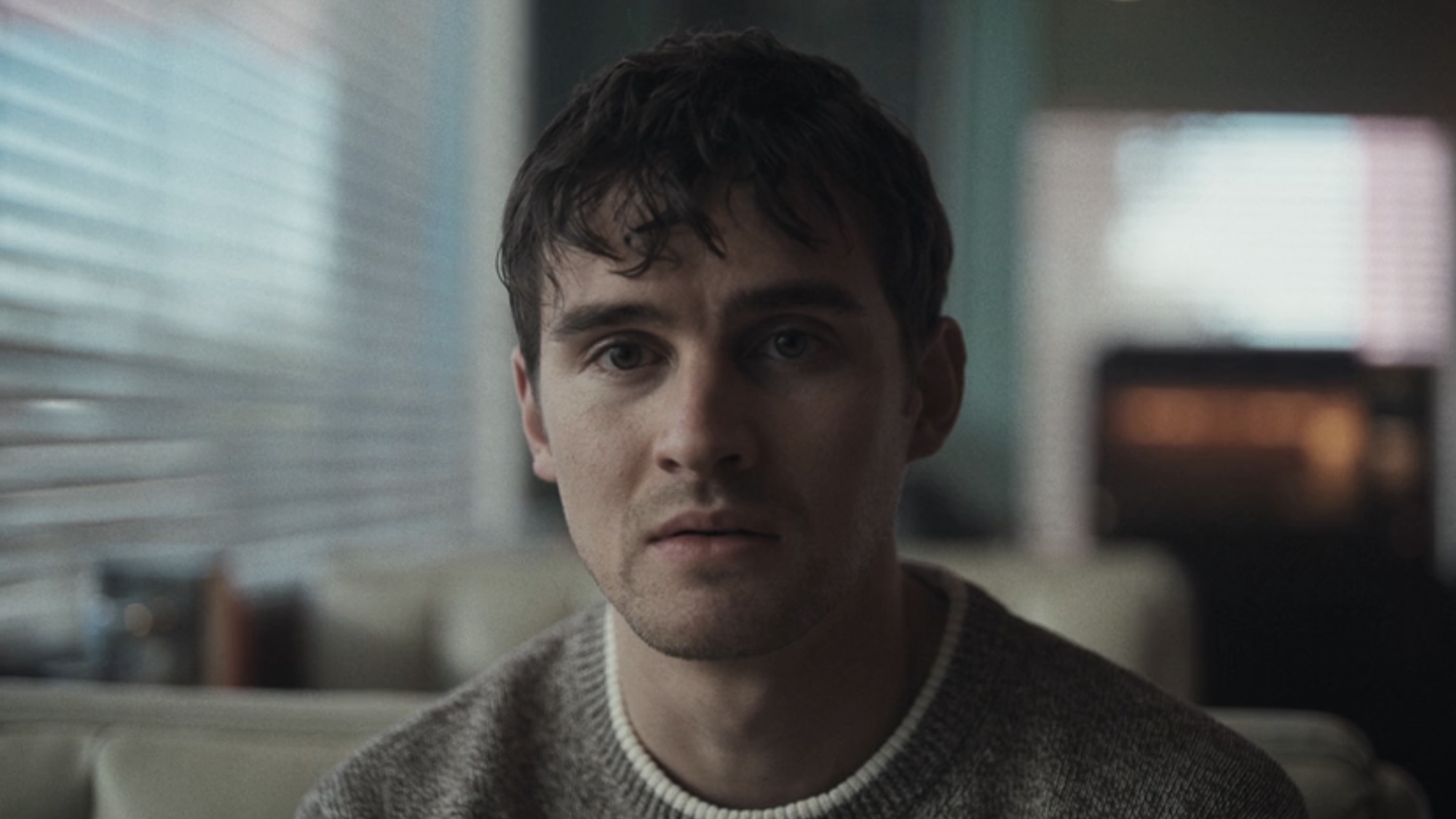
I challenge you, then, if you are quick to ascribe Bear the “abuser” label, to reflect on what abuse is and is not, and what kind of damage we may be doing to our perception if we only allow ourselves to operate at extremes. Obsession is a fantastic film for a reason, and its not because you think it’s trying to say “men suck!” It is far more interesting and complex than that, and it is owed some nuanced and, by far more importantly, original thought.
 S.L. Kletz
Leave a comment