Originally published February 22nd, 2026 on my starter blog for a class assignment. Edited May 18th, 2026.
When I read the news that a girl was murdered on the Oconee trails on University of Georgia campus exactly two years ago today, my heart stopped. I immediately reached out to my friends to check if they were okay — none to my knowledge frequented the trails, but I worried nonetheless until I received texts back from them, safe but just as shaken by the news.
I had just transferred to a new school from the University of Georgia and knew the exact area by Lake Herrick where the news was reporting a young woman had been murdered. I felt paralyzed until a short while later they released the name of the young woman. Laken Riley. I didn’t know her, but I felt like I did. In some ways, I felt like I could have been her.
During my freshman orientation, that area and the trails were spoken of as being a very student-friendly and safe area. My own orientation guide talked about how safe she felt on the trails since they were very popular with students. It was the Oconee trails where I first dabbled in running as a hobby to train for a 5K I spontaneously signed myself up for. It was also the Oconee trails where I had a scary encounter with an older man on a bike who tried to get me to come near him while asking for my number. Where I found myself doing the calculations of how fast I can run compared to how fast he can pedal. Where I knew I was doomed to fail if such a chase was to start. Where I wondered how close the nearest person was and how loud I needed to scream for them to hear me.

My initial thoughts as the news started to roll in swirled around safety issues frequently experienced by female runners, as well as the lack of safeguards for students on campus. Nighttime at UGA was a time of high alert regardless of how many students were around. There were many pockets of darkness on my walk back to my dorm from buildings on campus where I’d go for club meetings and community events. UGA also had eliminated their blue light system on campus due to lack of usage and instead opted for a mobile blue light system in the least user-friendly app I have ever navigated (nevermind there was a major internet outage the day Riley died).
As a criminal justice student there, I would get to hear the UGA Chief of Police at events from time-to-time, and during freshman orientation, he came to give a safety talk to students and parents where he situated crime and safety issues as concentrated in the downtown Athens bar scene and the well-known sexual assault practices on Greek Row. During a questionnaire he held with the criminal justice club, Chief Clark brushed off inquiries about safety issues on campus, including a question about lighting where he redirected students to a form where students can report dark spots on campus even though this form was not widely accessible and that it should primarily be upon the police patrol to take note of such gaps in safety.
When it was announced that Riley’s killer was a Venezuelan immigrant who had entered the country illegally, the conversation surrounding her death, for me, did not change from the lack of safety for women engaging in outdoor hobbies. Crocheting and coloring sound a lot more appealing when they don’t require pepper spray, sharing your location with people, or having emergency services on speed dial to participate. Women existing on their own in public spaces has an underlying, sometimes unspoken expectation of violence and assault. Businesses rake in millions of dollars in profits selling safety gear and self-defense classes made specifically for women (got a hot pink taser anybody?). But freedom is not truly free if it keeps you looking over your shoulder or ordering sleek, pastel safety alarms off of Amazon to attach to your keys.
Sometimes, I don’t want anyone to know where I am. Sometimes, I want to explore nature or travel alone. Sometimes, I get the urge to do all of the things the men in my life don’t often think about, and then I remember: I am a woman. I don’t have that privilege.
With Riley, though, much of the conversation about the violence women face did not center around male perpetrators as a general category, but instead on immigrants. On the campus YikYak app, which I had totally forgotten to delete from my phone after I stopped attending UGA two months prior, dialogues clashed between those who focused on the violence women on campus experience and those who wanted to talk about the fact that Riley’s killer was in the U.S. illegally. As the story spread to a wider sphere, I watched as Republicans used her murder to support their stances on immigration while Democrats tried to tiptoe around the acknowledgement of how her killer had been detained and released into the U.S. during the Biden Administration.
I understand why the conversation centered around her murderer’s illegal status, with only simple logical mathematics prompting the conclusion that, had he not been in the U.S., Laken would not have been murdered. While this stance is momentarily satisfactory, it commits multiple fallacies and avoids engaging in a nuanced conversation. Firstly, one’s immigrant status does not affect a person’s desire to harm or kill another human being. In fact, data has consistently shown that immigrants to the U.S. commit less crime than U.S.-born citizens at local, state, and national levels for both violent and non-violent crime.
The sole focus on the killer’s legal status also fails to recognize the broader issue of violence towards female runners, and women as a whole. As violent as it sounds, Riley’s killer remaining in Venezuela could not have guaranteed that someone else wouldn’t have killed her while she was running. Riley’s death was devastating and preventable, but to treat her murder as an opportunity to push for stricter immigration laws while simultaneously failing to enact policies to thoughtfully reduce violence towards women is hypocritical. It communicates a message that women are an expendable loss if the violence towards them is committed by someone born in the U.S., and that they are merely political fodder to excuse, quite literally, the sub-human treatment of immigrants.
In a 2024 campaign speech where he discussed Laken Riley’s death, Donald Trump, who has not shied away from admitting his own violence against women, spoke on the subject of immigrants:
“The Democrats say, ‘Please don’t call them animals. They’re humans.’ I said, ‘No, they’re not humans, they’re not humans, they’re animals.”
This dehumanization of a group comprising millions of people by a former U.S. president campaigning to return to office with promises of strict immigration policies sends a message with very concerning effects, as we are observing now with violence committed by I.C.E. agents and human rights violations in immigrant detention centers in Trump’s return to office.
In Patricia Roberts-Miller’s definition of demagoguery from Demagoguery and Democracy, one can see how Trump’s messaging latches onto cases like Riley’s to justify harsh attitudes against immigrants. Roberts-Miller frames demagoguery as discourse that promises relief from the responsibilities of rhetoric by framing public policy in terms of the degree to and means by which an outgroup should be scapegoated for the problems of the in-group. One characteristic of demagoguery is the presentation of issues of the in-group (often threats of extermination, emasculation, and/or rape) as so severe they justify harsh consequences against the out-group regardless of fairness. These narratives of threats posed by immigrants have been pushed by Trump for years, who has framed immigrants as “a death wish for our country” who are responsible for an “invasion” that has “spread misery, crime, poverty, disease, and destruction to communities all across our land.”
In the same speech where he spoke of Laken Riley and called immigrants animals, Donald Trump said, “They’re sending prisoners, murderers, drug dealers, mental patients, and terrorists… This is country changing, it’s country threatening, and it’s country wrecking.”
Despite a lack of evidence to support a wide-spread, intentional sending of criminals and “mental patients” in droves to the U.S., cases of immigrants who have committed crimes stand out to Trump’s in-group, as they justify the strict immigration policies many conservatives view as a solution to violence in the U.S. Opposition to these policies can then be reframed by the in-group as tolerance for crime despite this being a fallacy, which, as Roberts-Miller notes, is something demagoguery relies heavily upon.
The nuances surrounding the conversation of Laken Riley’s murder are not something Trump, as a demagogue, or the in-group he appeals to, seems to acknowledge. In a post after the killer’s verdict, Trump commits the fallacy of presuming immigration policy will prevent violent crime, stating the removal of immigrant criminals and securing of the border will ensure “nothing like this can happen again.”
This framing scapegoats immigrants as the source of violence against women without exploring broader policy avenues for the prevention of such violence. Even if there were no immigrants in the U.S. (for the sake of argument, we’ll conveniently forget about European immigrants and colonizers since the in-group also conveniently forgets they are overwhelmingly immigrants themselves), women would still endure violence because the root of the problem lies in patriarchy rather than migration, and patriarchy transcends borders. As a man who has dozens of sexual misconduct and sexual assault allegations against him, including from his former wife and those who were minors at the time of the incidents, Donald Trump has no problem placing the onus of violence and sexual violence towards women on immigrants. It deflects blame and accountability for men and America’s most powerful onto the faceless, amorphous being of the “immigrant” that bears the brunt of issues policymakers have failed to face head-on, perhaps because they know that they would be implicated should real consequences be made for abusers, which we can see firsthand with political resistance to the release of the Epstein files.
The unfortunate truth is that violence is a real threat women face, and the refusal of sexual violence can be a death sentence for women like Laken Riley who join thousands of other women throughout history who have been killed by men in a world that refuses to put its misogyny on trial.
I would be remiss to not acknowledge how Riley’s death has influenced safety efforts and policies on University of Georgia campus. Following her passing, more fences were installed on the campus perimeter, license plate readers purchased, police personnel hired, and lighting upgrades installed. Additionally, 50 emergency call stations were installed on campus and police patrols were added onto the Oconee trails. While the police response to Riley’s murder was incredible and would have bolstered my sense of safety on campus, these efforts don’t eliminate misogyny or violence, just as immigration policy does not solve these root issues surrounding the attempted rape and murder of a bright and beautiful aspiring nurse who should still be on this Earth today, free to run without fear for her safety.
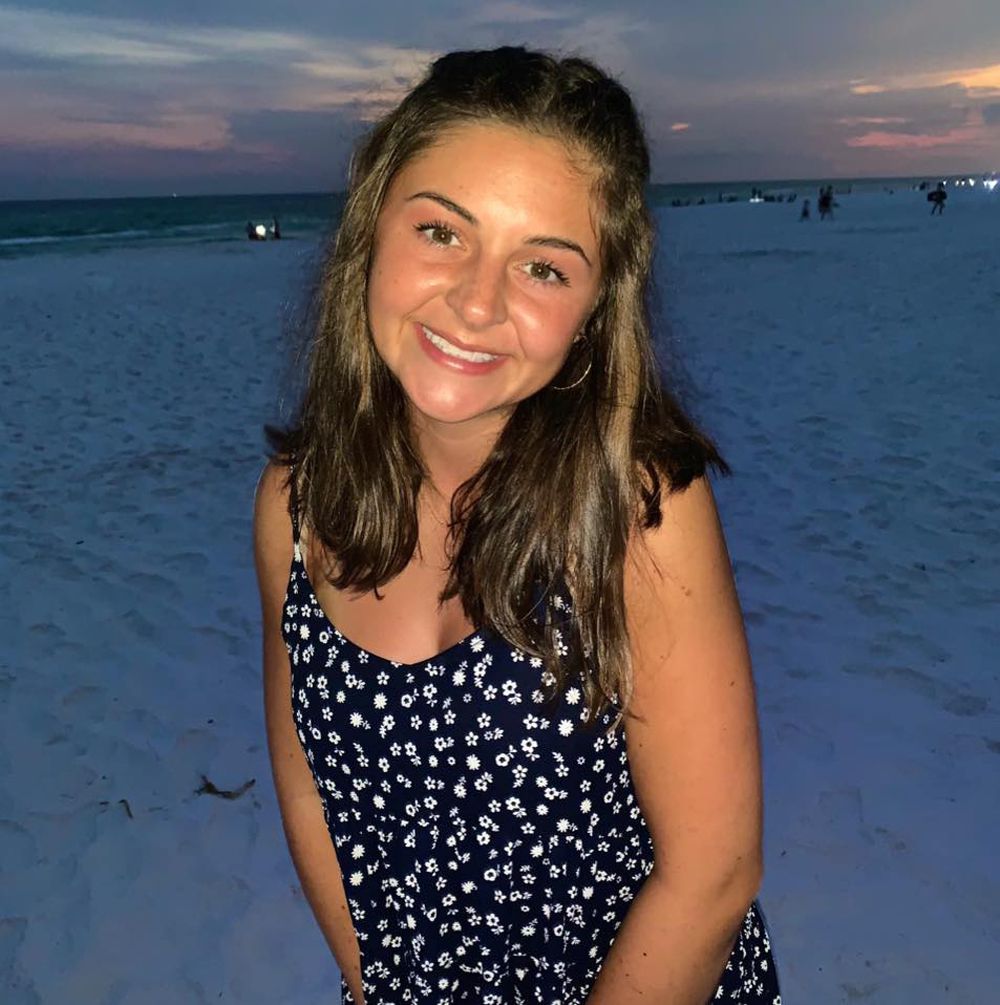
 S.L. Kletz
Leave a comment