How the modern body positivity movement enables EDs and the illegitimacy of the “don’t talk about women’s bodies” defense.

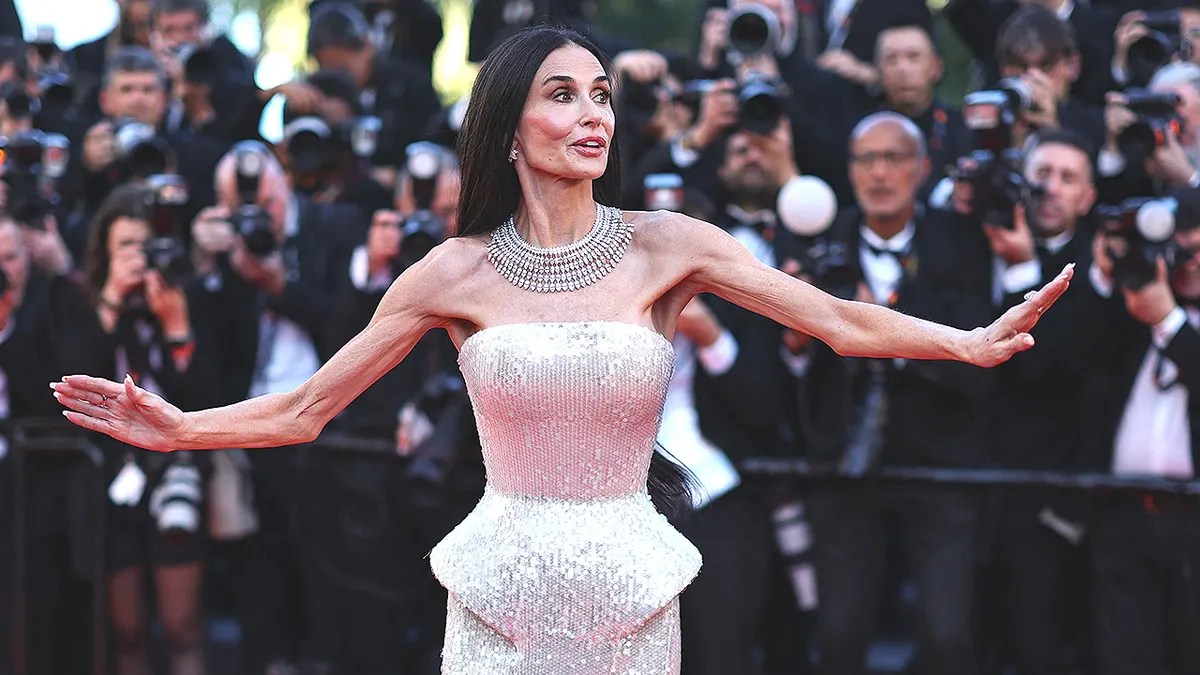
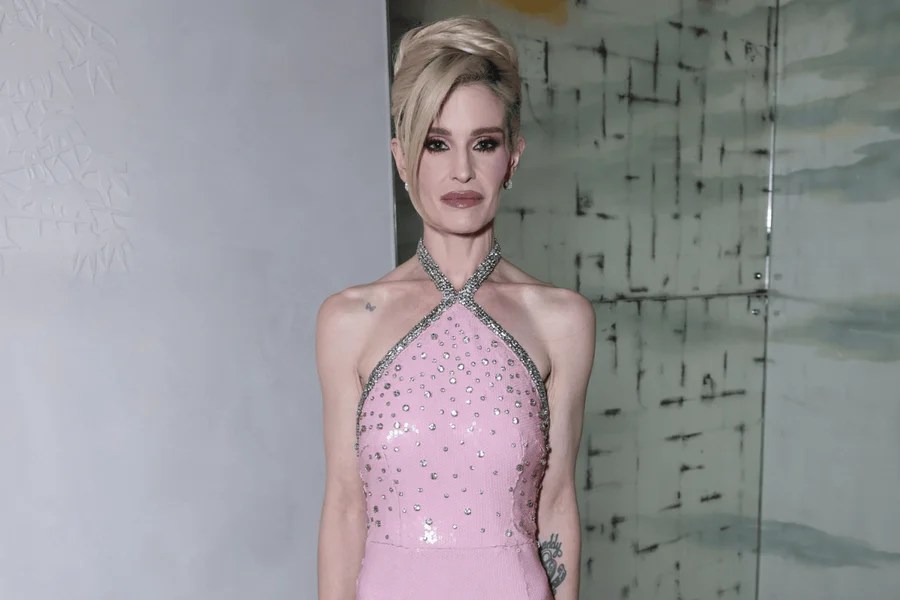
You know it when you see it, but you don’t want to say it. One of your favorite celebrities has just graced a red carpet event. She looks lovely, but there’s something off about her. Her jaw comes to a sharp and steep point. Her cheeks are pinched in a way that perhaps she could be sucking them in behind her closed smile. Her collarbones protrude to a point they are an accessory in and of themselves. And you wonder… Oh — but you shouldn’t. It’s not right to speculate about women’s bodies. You don’t even know her. But it’s staring you down right in the face — the sternum, the temporal wasting, the skin clinging to the bone. Saying she’s “naturally thin” doesn’t quite sit right with you as the signs of malnutrition are visible and worsening. Oh, you think, but she has people in her life who take care of her. It’s okay.
What’s not okay, as you’ve learned from the body positivity movement, is to say one of your favorite celebrities has an eating disorder.

The body positivity movement originated in the 1960s with Fat Activism, which largely arose out of queer BIPOC communities to allow marginalized bodies a space to advocate for their worth. The movement grew throughout the late 20th century to critique the way fatphobia seeped into marketing for clothing, diet products, exercise programs, and beyond.
Into the 2000s, fatphobia was on an entirely new level of extreme with the rise of the internet and tabloid media. Magazines ripped apart women like Kate Winslet and Jessica Simpson for having bodies that did not conform to the ideal of flat stomachs and toned arms, with even the slightest amount of body fat being cut to shreds with captions and commentary. If you’ve ever had the pleasure of reading a celebrity magazine from the 2000s, you may remember hot-or-not pages, who wore it better, etc. where women’s bodies were constantly scrutinized and compared to one another. One magazine issue I remember had a segment solely dedicated to sharing unflattering paparazzi shots of female celebrities at the beach just so that they could critique their bare bodies.
Into the early 2010s, with Instagram being a place everyday people could share images of their bodies and categorize their posts for reach with hyper-specific hashtags, body representation expanded and the modern body positivity movement was born.
The fashion and beauty industry thus pivoted in response to demands for more inclusive representation by including more plus-size models and expanding their size options to more accurately represent the spectrum of body sizes. This cooccurred with calls for more inclusive products for a variety of skin tones, with Rihanna famously launching her brand Fenty Beauty in 2017, which offered forty shades that included traditionally difficult-to-match skin tones.
The music industry also came to reflect this emerging acceptance of fat bodies, with Meghan Trainor’s debut “All About That Bass” becoming a huge hit in 2014. The record sings a message of loving your body no matter its size, reiterating in the verses “Every inch of you is perfect from the bottom to the top.”
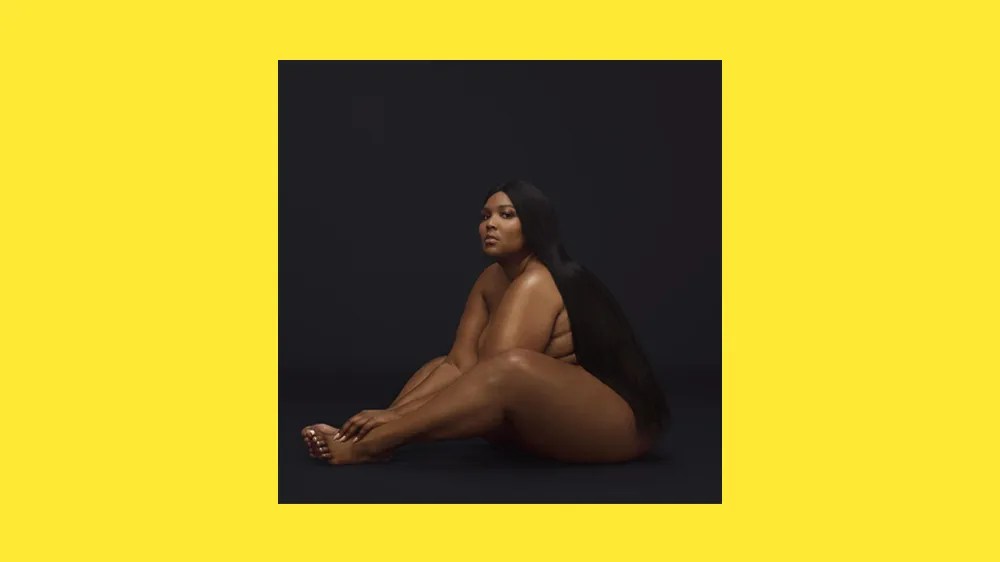
Hitmaker Lizzo came to the forefront of the body positivity movement in 2017 with the popularity of her song “Truth Hurts,” launching her into superstardom and culminating in the release of her 2019 album “Cuz I Love You” featuring her naked body on the cover. Her music embodied radical joy and self-love, with her single “Juice” opening up with the line “Mirror, mirror on the wall / Don’t say it, ’cause I know I’m cute” and her collaboration with Missy Elliott titled “Tempo” centering on the subject of fat women being lovable and good at dancing, with Missy rapping, “I’m big-boned with nice curves / Look at me, I know I look grrrd.”
Lizzo later claimed that the body positivity movement had been taken over by bodies it wasn’t made for, claiming, “People are finally celebrating medium and small girls and people who occasionally get rolls, [but] fat people are still getting the short end of this movement.” She went on to discuss how the fat, queer BIPOC who created the movement weren’t reaping its benefits in the same way smaller women were.
One of the resounding trends out of the body positivity movement itself has been the statement — “don’t talk about other people’s bodies.” The claim is particularly in response to the media or individuals inquiring about the health of other people’s bodies and critiquing the body positivity movement for “promoting obesity.”
While I disagree with Lizzo saying the body positivity movement shouldn’t be made for everybody, I would agree it has been hijacked to a point of toxicity — particularly when it comes to defending unnatural skinniness.
You’re not crazy for noticing that celebrities have been getting skinnier recently. The GLP-1 craze has turned a diabetes and heart health drug into an appetite suppressant being rampantly abused for the sake of “looking good.” Even Meghan Trainor and Lizzo have opened up about their use of GLP-1s for weight loss.
I don’t criticize anyone for using GLP-1s and know several people who have regained confidence and mobility after starting treatment. I believe that everyone should have access to the food, exercise, and healthcare they need to have the body they desire, but I also recognize that, regardless of the impact of the body positivity movement, slimness is still the beauty standard, whether we want to say that out loud or not.
So when celebrities walk the red carpet and online forums and comment sections raise concerns about their weight loss, the instinct for some is to think this automatically falls into the same 2000s tabloid behavior of picking apart bodies. But if it is not okay to discuss people — particularly women’s — bodies — what do we do when the bodies we are seeing are dangerously thin?
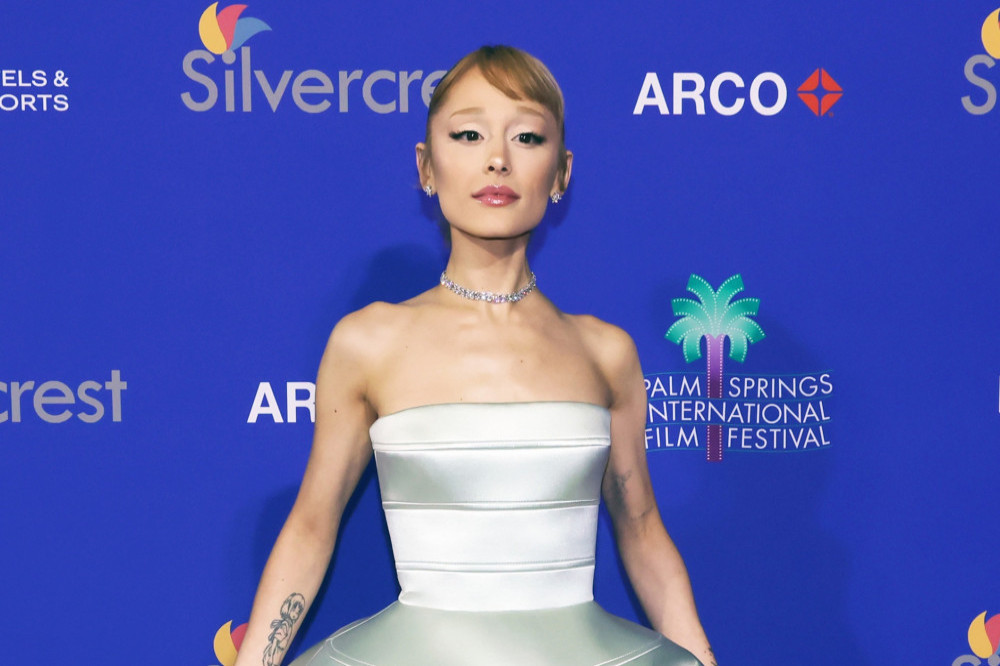
The demand for silence in response to these bodies is a call for normalizing them. When Ariana Grande sings “Do not comment on my body, do not reply” but appears skeletal in her new music video for the titular single from her album petal, is it really so wrong when the comment section is filled with worried onlookers proclaiming “It’s not normal to be able to see someone’s ribs, bones, and tendons so clearly…” and “This is beyond horrifying. I don’t want a single girl to think this is normal or aspirational”?

Model and body positivity activist Charli Howard, who has recovered from anorexia, wrote in response to Grande’s concerning weight loss on her Instagram on July 31st, 2026:
“I think it’s vital we discuss imagery/videos/content like these and the damage they can – and will – have on women and girls. WHAT YOU SEE HERE IS NOT NORMAL. Over the past few weeks, as images of Ariana’s concert get plastered around online, I obviously see comments from worried fans, but I also see other people convincing others that she looks ‘healthy’, or that she has simply ‘lost puppy fat’ (🤨). Some even make jokes about it. What I see is someone in desperate need of hospitalisation and care, and while I know it’s often impossible to help someone at this stage of anorexia, there HAS to be an immediate intervention. Over the years, I have met numerous women who have almost died from the disease – women who will spend their lives fighting demons that tell them they are worthless and ugly. These are women that can never have children; women who starve themselves as a means to starve away any shame or inner pain they may be experiencing.
I think it is absolutely appalling, from both a moral and capitalistic standpoint, to have released these videos and an album when this person needs psychiatric help and hospitalisation. The teams involved should be absolutely ashamed. What’s disappointing is that it takes teams – often hundreds – of people to approve videos like these and get them over the line. Each and every one of you, including her family and management, are enabling this person and encouraging her illness when she needs help.”
One of the comments under Howard’s post reads:
“can i ask if you know her personally? i assume you don’t. definitely don’t. so maybe, just maybe, keep your mouth closed. dedicating a whole instagram post you to someone you don’t know, is so weird. i hope you can go to therapy if another human is making you feel the need to post this. 🙂”
Another reads:
“So let’s pretend someone isn’t able to gain weight because of some autoimmune disease ,automatically that gives you the AUDACITY to commenting on someone’s body saying “this is not normal”? It looks like you are looking for likes,followers and popularity cuz talking about Ariana is a guarantee when it comes to that ! Ariana can get the best doctors IN THE WORLD so I still don’t understand your concern like she is a poor broke girl who needs help .”
This demand that we don’t speak about someone’s weight is rooted in the sensitivity popularized by the body positivity movement — weaponizing the language used to help normalize bodies in their variety of sizes to criticize anyone who speaks up about someone who is suffering. When we see someone with cuts on their arms from self-harming, it is our instinct to reach out to check if they are okay and need help. But when self-harm doesn’t involve blood or bruises or burns, it’s harder for people to apply that language to what they’re seeing. Let me remind you that anorexia is the deadliest mental illness. More than depression. More than substance abuse disorder. Even those who recover suffer from long-term effects and can still die early from cardiac and gastrointestinal issues. 5-10% of people die within 10 years of developing anorexia, and 18-20% die within 20 years due to complications from the condition.
People who defend this extreme thinness like to invoke the name of Chadwick Boseman — the late Black Panther actor who concerned the public with his weight loss while battling cancer in private before his death in 2020. Essentially — don’t accuse someone of having an eating disorder because they could be suffering from a disease behind the scenes.
This entire argument is rooted in plausible deniability and reliance on how we shouldn’t comment on other people’s bodies because we don’t know what they’re going through. Of course, no individual, celebrity or not, owes the public an explanation of their personal health, but when what we have come to know of some of the most beloved public figures in recent years has become their bones, we can name this skinniness for what it is: a trend. A malignant and dangerous one that will leave people dead in its wake.
The way the body positivity movement has been warped to enable celebrity EDs has also been similarly embedded into the PR of Hollywood skinniness. Celebrities don’t have to take accountability for the damage their image causes because 1) they are clearly struggling themselves and 2) they (to an extent) cannot control how they are perceived. But while the young girls of the world count their calories and take on lasting damage to their health in the name of a thigh gap, celebrities can move on once the skinny trend dies out. They have the wealth and the resources to seek professional treatment for their mental and physical health, to take care of their bodies through food and exercise, and to pay crafty publicists to help the public forget how bad things used to be.
I feel immense frustration watching celebrities parade around their bones, worried for the young girls of the world who may be growing up believing not only are such bodies normal, but they are what their own bodies should look like. However, I don’t think there is one singular catch-all solution to a problem that involves individuals we don’t personally know taking care of their bodies.
To call someone irresponsible for going out in public with an eating disorder is making an unspoken ask that is just as irresponsible to make: go get help and come back when you don’t look like you’re dying. Eating disorders are going to exist regardless of whether or not they are on display. While anorexia thrives off of showing off one’s body, eagerly gobbling up comments that it is too skinny, it cannot be shoved in the closet because we’re worried about young girls seeing anorexic celebrities and developing eating disorders of their own.
What is needed in place of demanding celebrities take accountability and get help (ha! When has that ever worked?), what we can do as a public audience is develop the ability to understand when a body is not realistic and should not be coveted because of the extreme health issues associated with it. Celebrities have busy schedules and don’t have the time to read every article or comment written about them. But the average popular media consumer has a small amount of time in their day to absorb news and discourse surrounding famous figures. If we are scrolling past skeletal figures, reading comments that their bodies look great and healthy and we shouldn’t suggest otherwise — what do we then begin to internalize? If being malnourished is considered healthy, then what am I?
We cannot place the judgement on individuals with a mental illness for that mental illness trying to kill them. But we can speak up when we know that someone is not okay — and not coming from a place of parasocial relationships with celebs, but in the hope that maybe some young impressionable person reading learns that extreme thinness is unhealthy. Not because someone’s weight is tied to their worth, but because starvation kills.
Existing with an eating disorder in the public eye does not make that individual complicit in the impact their body has on others. Eating disorders are a mental illness, and mental illness is not rooted in rationality or reality, and it is unreasonable to ask that someone erase all of their struggles for the sake of their audiences. If we need to place some accountability somewhere, it needs to be on the teams profiting off of an individual’s continued stardom. If ED recovery looks like a star stepping away from their fame — whether temporarily or permanently — that should be the case. No sold-out tour or Oscar-nominated film is worth the death of someone due to an untreated eating disorder.
So let’s stop demanding silence in the face of something we should not be silent about. Bodies have the right to exist in all of their states as much as they have the right to access the care needed to keep that body healthy. When celebrities have access to ED treatment, it’s not immoral to ever suggest when their body looks concerning. Because while they have access to all of the therapy and rehabilitation and dieticians that they’ll ever need, the average person does not. And if what it takes to make someone second-guess skipping a meal is speaking up about the dangers of extreme thinness and calling it out when we see it, we should be shouting from the rooftops.
Body positivity should not be okay with letting bodies waste away into starvation. Body positivity should not be okay with the idea of untreated mental illness causing premature death. Our bodies should be alive and nourished. That is the priority.
There is nothing positive about normalizing eating disorders, and we need to call out the silence for being exactly that. Holding back for the sake of trying to be sensitive is not the right thing to do. But that’s what so-called “body positive” ED defenders will hope you’ll do: keep biting your tongue until its severed completely from your mouth and you can no longer say anything at all — but hey, without your tongue… you do weigh a little bit less, don’t you?
If you or a friend is struggling with an eating disorder, please check out the following resources for help:
Eating Disorder Hotline: 1-866-662-1235
24/7 Live Chat Bulimia Support: Alsana
Virtual Eating Disorder Treatment: Equip Health

 S.L. Kletz
Leave a comment